Chunking, Qdrant and retrieval without duplicate RAG search results
I check the new path from worker to search so that a long capture is not only processed, but also appears cleanly as one result.
Contents
- What I want to see during verification
- The retrieval challenge
- The deduplication strategy in the query path
- What the results show
- GDPR Article 17 compliance at the press of a button
- All articles in the series
What I want to see during verification
To examine a split workflow thoroughly, we need to keep three clearly separated layers in view:
- The worker must reliably split a long source text into overlapping token chunks.
- Qdrant must be able to store multiple points per capture record.
- The query path must still return at most one highly relevant result per capture.
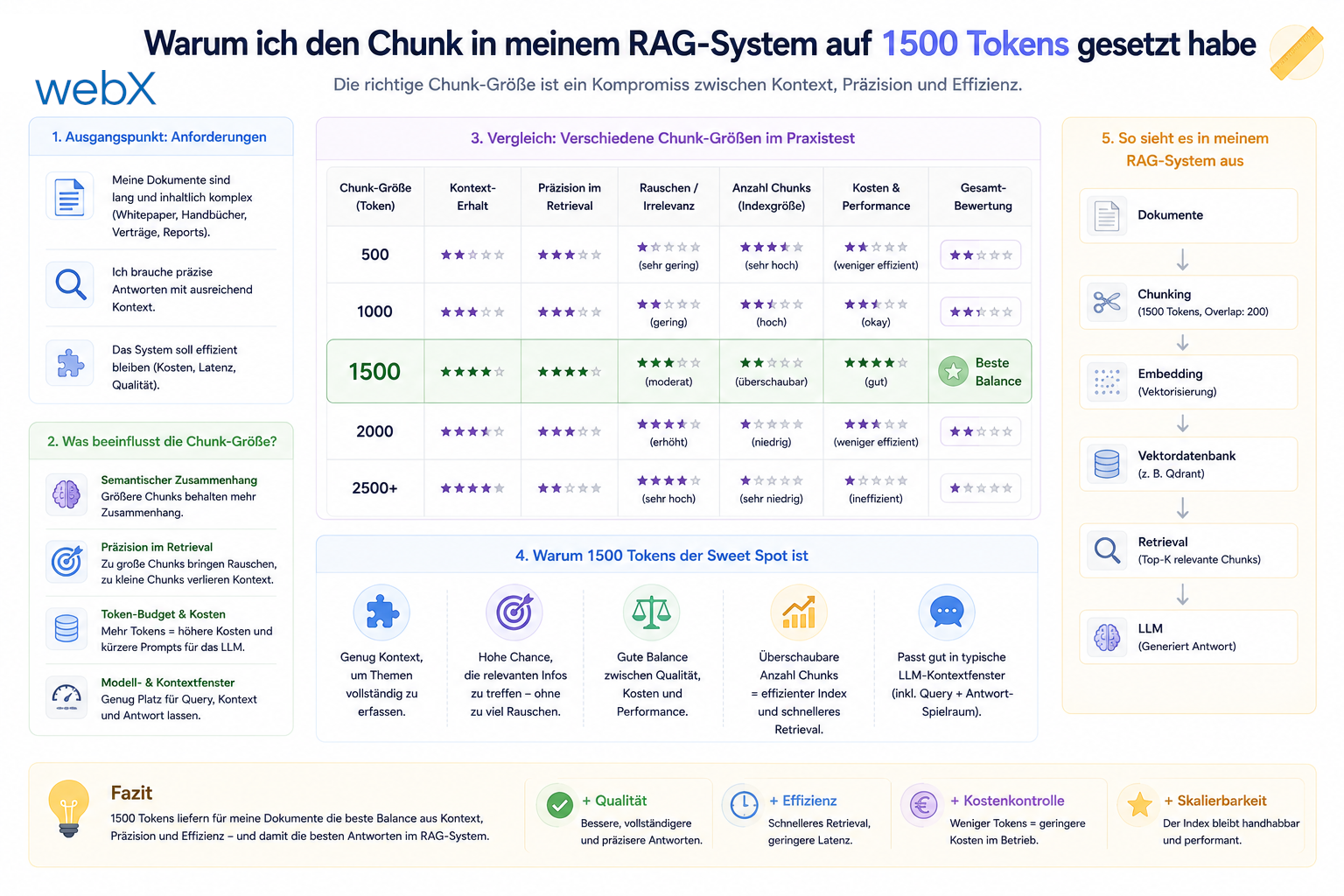
Only when these three layers work together seamlessly do we have a robust RAG system. We had already diagnosed the problem and chosen 1500 tokens. Only then did the ingestion process have enough stability to validate the interaction between storage and search systematically.
The retrieval challenge
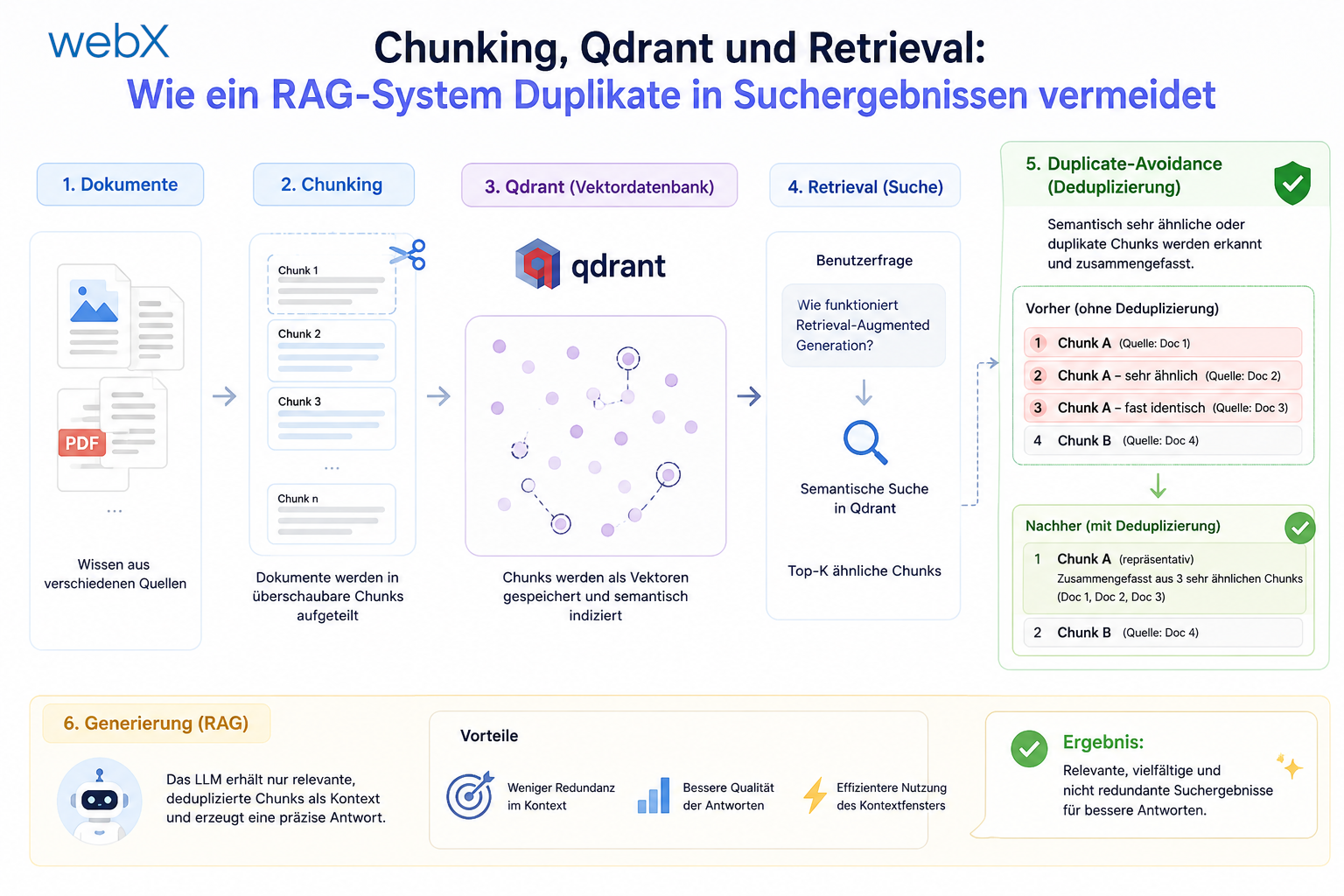
Once a capture is divided into chunks, Qdrant contains multiple vectors referring to the same physical capture through captureId. A similarity search is likely to return several chunks from the same post.
Without countermeasures, the search results would be flooded with duplicates or fragments of one post. This drastically reduces result diversity and fills the downstream LLM’s valuable context window with redundant text.
The deduplication strategy in the query path
We solve this directly in the backend retrieval logic, retrieval.ts:
// Query deduplication logic based on captureId
const deduplicatedResults = results.reduce<StoredQueryResult[]>((acc, current) => {
  const exists = acc.some((item) => item.payload.captureId === current.payload.captureId);
  if (!exists) {
    acc.push(current);
  }
  return acc;
}, []);
First, we run the Qdrant similarity search, isolated to the requesting user’s userId. Then we deduplicate the returned matches programmatically by captureId. Only the chunk with the highest cosine similarity score for the user’s query remains for each capture.
What the results show
The end-to-end validation confirms success:
- In the worker log, we see the exact input token count and resulting chunks, for example
tokens=2145 chunks=2. - In Qdrant, points are stored cleanly under random RFC 4122 UUIDs with all necessary minimal metadata.
- In the search API response,
POST /queryreturns a highly precise, deduplicated result array. Each match represents a unique capture, enriched with the semantically strongest text excerpt for the LLM.
GDPR Article 17 compliance at the press of a button
Choosing a single shared collection with a keyword index on userId also greatly benefits the right-to-erasure process. We no longer need to laboriously delete per-user collections to remove all of a user’s vector data without residue. A simple Qdrant filter-delete request immediately deletes all associated points:
// Instant tenant erasure from shared collection
await client.delete(COLLECTION_NAME, {
  filter: {
    must: [{ key: 'userId', match: { value: userId } }],
  },
});
This delivers GDPR compliance at high speed without operational overhead.
All articles in the series
- Vision and system overview: Chrome Extension, RAG architecture and project background: Read article
- Building a RAG system: Qdrant, embeddings and cosine similarity in TypeScript: Read article
- AI provider abstraction: Ollama vs. OpenAI, interface design and no vendor lock-in: Read article
- Chrome Extension MV3: Three isolated runtime contexts, message passing and Strategy Pattern: Read article
- Docker Compose strategy: The override pattern, from local development to Azure: Read article
- Ollama locally vs. Docker: The decision and its consequences: Read article
- Ollama auto-pull entrypoint: Automated model setup at container startup: Read article
- tsconfig and Vite:
Node16vs.bundler, and why Vite has its own rules: Read article - Load complete Instagram captions with MutationObserver: Read article
- Chrome Extension foundation with health indicator and retry queue: Read article
- Phase 2 features: Shadow DOM overlay, Tailwind v4 and duplicate detection: Read article
- Race condition in platform detection: How a UI event breaks Instagram detection: Read article
- Extracting PostId in two Instagram layouts: querySelector vs. ancestor traversal: Read article
- Capture a complete Instagram carousel with MutationObserver: Lazy loading, observer-before-click and timeout fallback: Read article
- Notes and tags when saving screenshots: Read article
- Instagram keyboard shortcuts block Chrome Extension input: Read article
- Lowercase normalization and duplicate detection in tag input: Read article
- Zitadel Login V2 in Docker Compose with three hidden errors: Read article
- PKCE OAuth in a Chrome MV3 extension: Read article
- React frontend with react-oidc-context and Zitadel: Read article
- Vite build-time environment variables in Docker: Read article
- Event-driven ingestion with BullMQ and Redis: Read article
- MinIO instead of Azurite: S3-compatible object storage locally and on Hetzner: Read article
- access_token, id_token and the Userinfo endpoint: Which belongs where: Read article
- Qdrant multi-tenancy with one collection per user: Read article
- When backend and frontend know different types: Read article
- Removing Zitadel bootstrap: Host header bug and manual setup: Read article
- Backend code review with six problems fixed before launch: Read article
- Traefik instead of NGINX: Reverse proxy for a growing Docker Compose stack: Read article
- Two-layer rate limiting: Traefik and express-rate-limit with Redis: Read article
- Implementing GDPR Article 17 correctly: Promise.allSettled and export batching: Read article
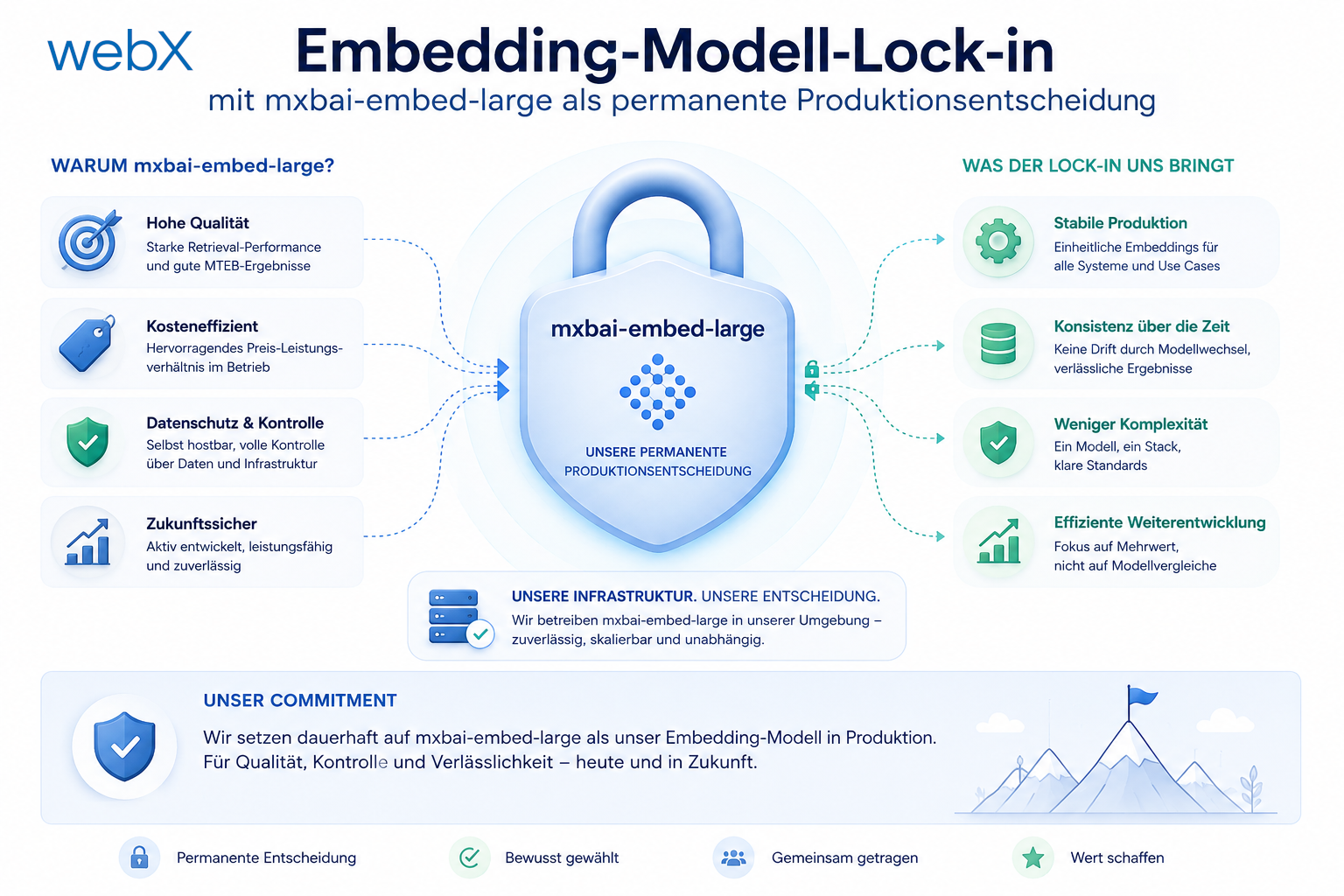
- Embedding model lock-in: Why mxbai-embed-large is a permanent production decision: Read article
- Docker volumes in production: Named volumes, bind mounts and the Hetzner volume approach: Read article
- Two vulnerabilities before launch: Redis without authentication and an exposed Qdrant admin port: Read article
- Traefik as the single entry point in the Docker Compose stack: Read article
- Connecting Zitadel behind Traefik with issuer, JWKS and Login V2: Read article
- Fixing the frontend when the nginx healthcheck fails on localhost: Read article
- Observability for my Docker Compose stack with Bull Board and Dozzle: Read article
- Open the Qdrant dashboard securely with local Traefik and an SSH tunnel: Read article
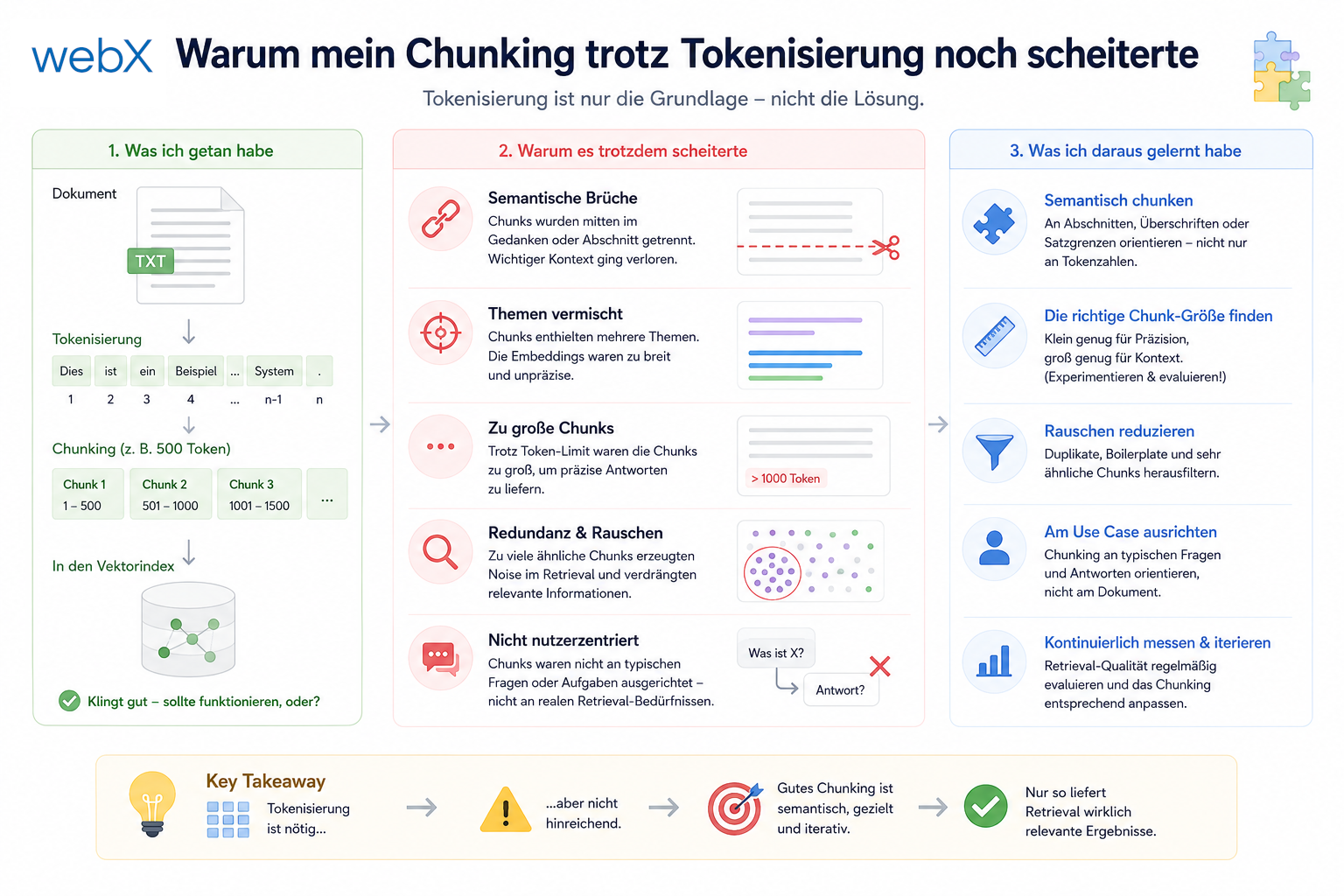
- Diagnosis of chunking failures despite tokenization: Read article
- Why I set the chunk size to 1500 tokens: Read article
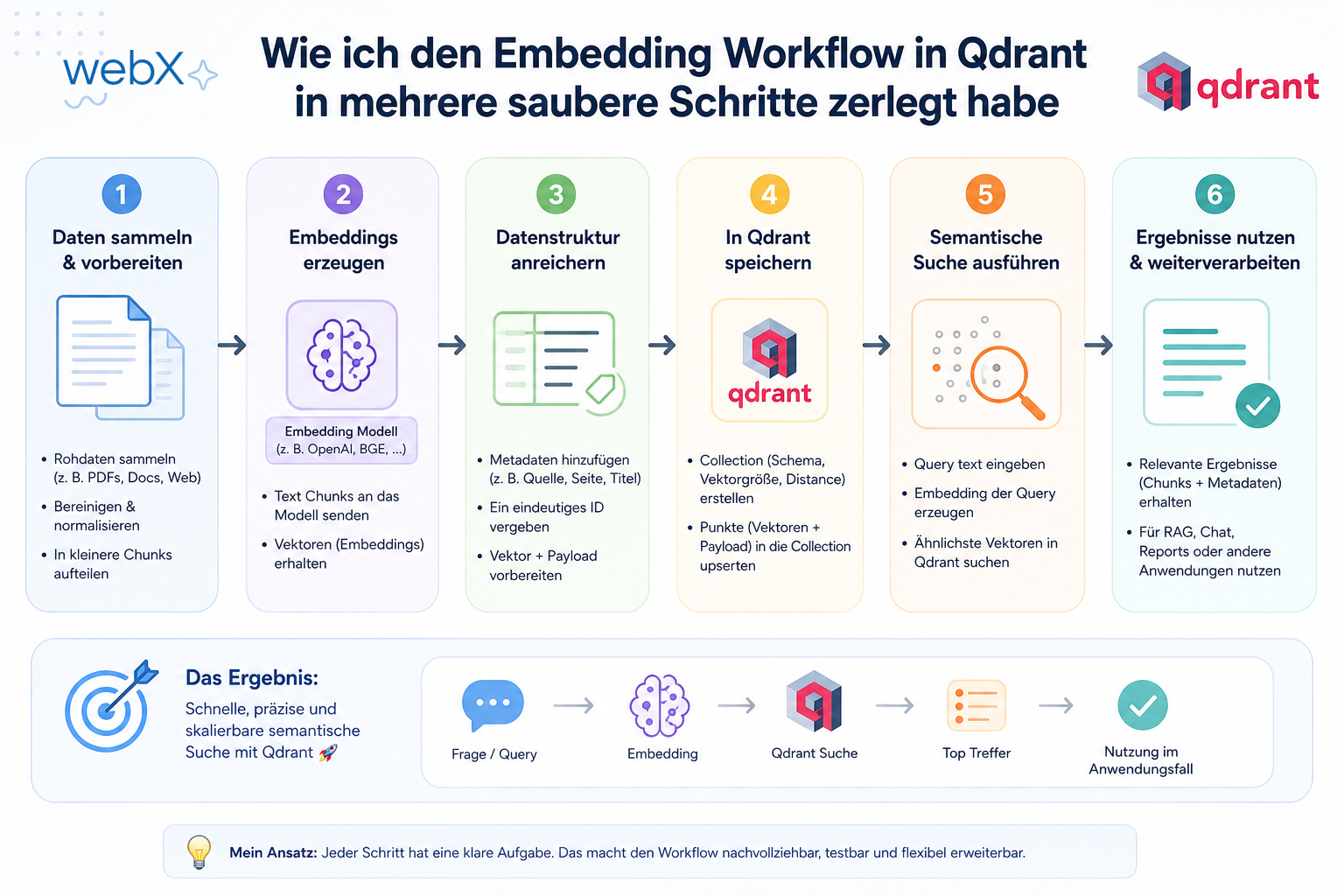
- Splitting the embedding workflow into clear steps: Read article
- Bringing chunking, storage and search back together: (this article)
- Capture Intake as a separate module, less orchestration in the Express endpoint: Read article
Are you working on a similar RAG system and want to assess the same structure for your project? Let us assess it together.